Now on Kickstarter · Crafts Category · Tokyo, Japan
Kiriko × Kintsugi
The Glass That Holds More
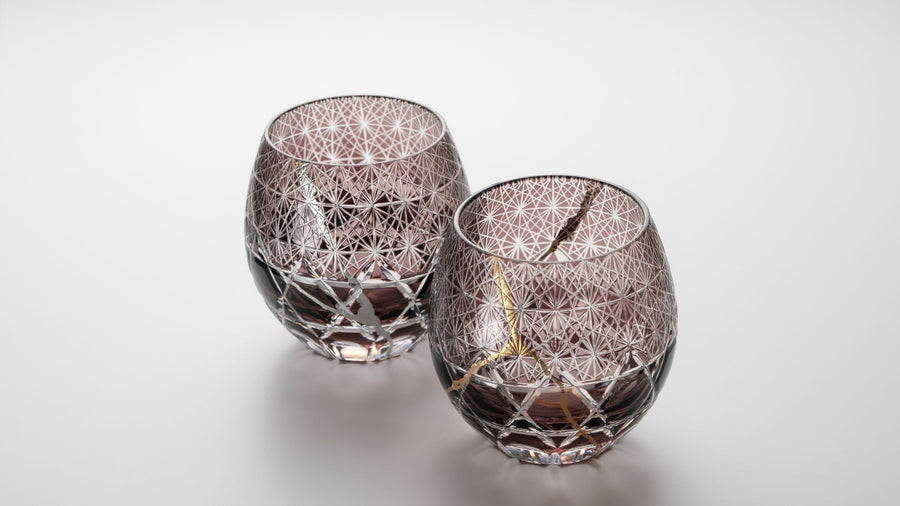
A large-format Edo Kiriko cut glass finished with hand-applied kintsugi gold — designed not for display, but for daily life.
Most beautiful objects ask you not to touch them. This one asks you to reach for it every day.
The Kintsugi Glass is the first product from Nuri Koubou — a Japanese lacquerwork atelier — to enter the world of cut glass. It pairs two of Japan's most storied traditions: Kiriko zaiku, the exacting art of hand-cut glass geometry, and kintsugi, the philosophy of repairing broken things with gold. The result is a large-format, wide-body glass that is both a work of craft and something you'll want in your hand every evening.
The Philosophy of Imperfection
Centuries ago, Japanese craftspeople developed the practice of repairing broken ceramics with lacquer mixed with gold. Rather than hiding damage, they illuminated it — transforming fractures into features. The philosophy is simple: what has been broken is not diminished. It is made more interesting.
The gold lines on this glass are not decoration. They are a reminder that the most meaningful things are rarely perfect — and that is exactly what makes them worth holding onto.
Two Traditions, One Object
Kiriko Zaiku
Developed in the early 19th century, Kiriko involves cutting precise geometric patterns into glass entirely by hand. Each cut is made individually — no templates, no shortcuts. The result catches light from multiple directions simultaneously, creating an interior shimmer that changes as you move.
Maki-e Gold
The gold detailing draws on maki-e, a technique over a thousand years old in which gold powders are applied to a lacquered surface before it sets, then polished to a luminous finish. Unlike surface printing, maki-e is worked into the material itself — a glow from within, not on top.
The gold lines follow the geometry of the Kiriko zaiku cuts — as though the glass itself has been repaired, made whole and made golden, in the Japanese tradition. Each piece is hand-finished at Nuri Koubou's studio.
Specifications
- Form
- Wide-body, large-format
- Technique
- Traditional Kiriko zaiku cut glass
- Gold Detailing
- Maki-e (hand-applied, lacquer-embedded)
- Finish
- Hand-finished by Japanese artisans
- Production
- Small batch, made in Japan
- Care
- Dishwasher safe; hand wash recommended
One Glass, Many Moments
The Kintsugi Glass was designed to move through your day — from morning to evening, dining table to home bar. Its wide, open form accommodates ice, garnishes, and generous pours. Its substantial weight feels grounded and intentional in the hand.
The wider form means your hand wraps around it naturally. The additional volume means you're not constantly refilling. The generous opening means aromas aren't trapped — whether you're drinking whiskey, tea, or something in between.
Why This Is Different
The market is full of "kintsugi-inspired" products — most are printed patterns on factory glass, designed to evoke a philosophy rather than embody it. The Kintsugi Glass is made by the same atelier that repairs ceramics with gold using traditional technique, and that heritage is present in every piece.
About the Maker — Nuri Koubou
Nuri Koubou is a Japanese lacquerwork atelier founded on the belief that what is broken is not without value. The studio has spent years repairing ceramic objects, teaching kintsugi, and exploring imperfection as beauty. The Kintsugi Glass is their first foray into cut glassware — a natural expansion from repair to creation, from ceramics to glass.
⚠ Shipping to the United States
Due to the suspension of the US De Minimis policy (Executive Order removing the $800 duty-free threshold for shipped goods), Japan Post shipping to the US is temporarily paused. The creator is exploring alternative carriers; shipping costs may be higher than initially estimated and will be confirmed via the pledge manager after the campaign ends.
Import fees are the responsibility of the backer. Shipping costs are collected post-campaign via pledge manager and are not included in the pledge amount.
Production & Timeline
Each glass is individually finished at Nuri Koubou's studio in Japan. Production is limited by nature — and the creator considers that time part of what backers are receiving. Regular updates are committed at every stage, from production confirmation through to shipping.
Estimated delivery: November 2026.
Back the Kintsugi Glass
Campaign runs until 3 July 2026. Now 161% funded — still accepting backers.
View on Kickstarter →